Oleh Brigitta Hauser-Schäublin**
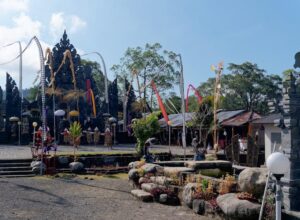
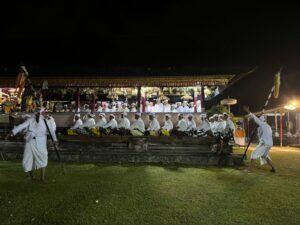
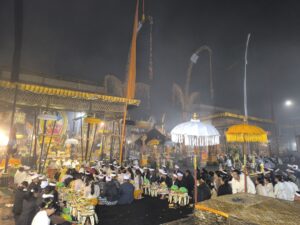
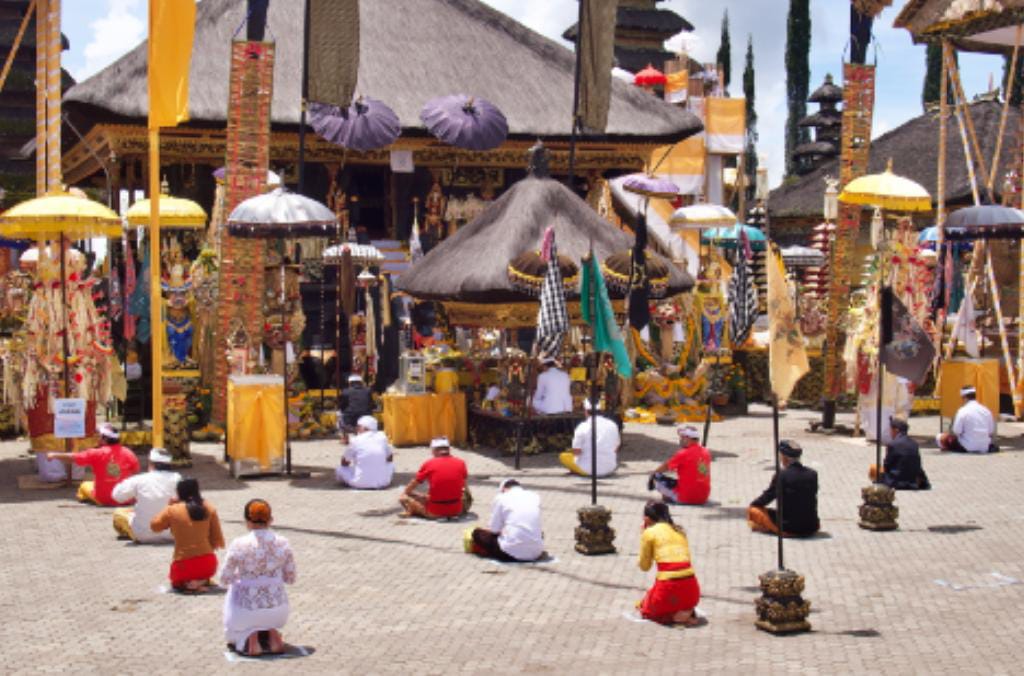
Foto: Persembahyangan Ngusaba Kadasa di Utama Mandala Pura Ulun Danu Batur saat pandemi Covid-19 (Maiva Utama)
========================
Pura Ulun Danu Batur is a Pura Kahyangan Jagat, one of the major temples of Bali. It differs from others in several respects. I will briefly discuss the particularities that distinguishes this temple from others; they are proofs of its singular history (Hauser-Schäublin 2011).
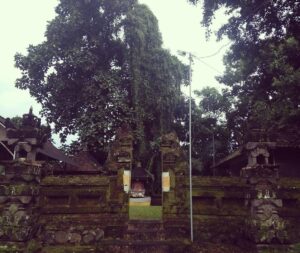
Pura Ulun Danu is part of a whole complex and borders Batur’s village temples, Pura Desa, Bale Agung and Puseh, as well as two further courtyards called Pura Dang Kahyangan; the latter contain a representation (pesimpanan) of Pura Jati that is located in the caldera plain near the lake. The unity of the complex is expressed in pathways that interconnect these temples of differing status. This combination already existed before the volcano erupted heavily in 1926 and, consequently, the village and its temple were re-established on the caldera rim, in Kalang Anyar. The combination is the result of a process of merging of formerly distinct temples and villages by the royal house of Gelgel, possibly by Dalem Baturenggong (16th century). It was a result of conflicts between the mountain Balinese who resisted the colonisation of Majapahit immigrants and their claims to power. The new village, Batur, and its temple are said to bear the ruler’s name.
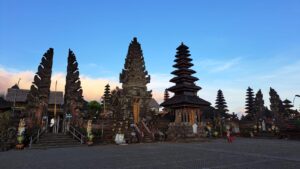
The most kaja part of the Jeroan is sacred and separated by a low wall from the other section of the Jeroan, where the pilgrims pray and most of the rituals take place. The shrines of the supreme deities, Ida Bhatari Danu (11 meru), Ida Bhatara Sakti Meduwe Gumi (9 meru), Ida Bhatara Gung Agung (9 meru), Ida Bhatara Gede Astagina (5 meru) and Ida Bhatara Mutering Jagat (3 meru) are in the kaja part. Ida Bhatari Danu, the Deity of the Lake, and Ida Bhatara Sakti Meduwe Gumi, the World Ruler who symbolises the spiritual dimension of the Batur volcano, form a supreme couple, Ida Bhatara Mekalihan. This divine couple is attended by Jero Gede Mekalihan, Jero Gede Duuran and Jero Gede Alitan. Ida Bhatari Danu is the deity in charge of the gift of water that feeds large parts of Bali; a vast network of villages and irrigation associations, subak, are tied to the Deity of the Lake and her site in Batur. Since Pura Ulun Danu’s coming into being, the prestigious meru shrines have been patronised by royal houses, today–in the course of democratisation–complemented by Kabupaten of Bali Province and their authorities. Due to this noble patronage of the most important shrines, the temple can be called a state temple.
The combination of Pura Ulun Danu with further temples, especially village temples, resulted in a division of responsibilities and tasks: Pura Ulun Danu is headed by six high priests, two jero gede, two jero balyan, and two jero penyarikan, while Desa Pakraman Batur is in charge of the village temples. The logistics of the whole complex and the material organisation of rituals is provided by Batur village. The organisational centre–the office of kasinoman, a member of balirama on duty, the office of penyarikan, the kitchen (pawaregan) with storerooms and rooms for catering to honourable pilgrims during the major festival pujawali/Ngusaba Kadasa and the hall (sumanggen; bale patandingan), where knowledgeable women produce hundreds of different offerings depending on the imminent ritual–constitutes a further large compartment of which desa pakraman is in charge.
The two high priests, jero gede, have a separate official compound where they reside during rituals. This compound includes a pamerajan (with a section for each of the priests) where the main festival starts with a ceremonial meal to which the members of Balirama are invited. The offices of jero gede and jero penyarikan have a singular status with traces of noble origin.
Batur village was also the site of a mekel or mekel agung when it was still located in the crater plain. The mekel’s house differed in style from others since he was of noble descent. A Banjar Jero also exists today in the immediate vicinity of the temple; descendants of the (former) noble family live there. The office of a kepala desa/perbekel was formerly linked to descent, and the officeholder still has a double function, in dinas as well as in adat; in the latter domain, he is called jero petinggi, and in this double function, I Ratu Karang Buncing.
The network of pasyan (pasihan) incorporated about 370 villages and subak in 2020 (Ariana, 2021). The number of pasyan is rendered with 45 villages in the earliest (unfortunately undated) lontar manuscripts (Rajapurana Pura Ulun Danu Batur) kept in the temple. They are listed as supporters of the temple, and each village apparently sent a couple to stay at Batur. Pasyan villages were obliged to perform labour (ngayah) and bring a part of the yields of their fields to the temple (in the form of offering-tributes). Nowadays, the two Jero Penyarikan still invite the pasyan to attend the Pujawali/Ngusaba Kedasa festival. They send them lontar letters in Balinese writing. These letters contain lists of the produce each village has to provide. Their number has continuously increased over the past few decades. Pasyan are devotees of Batur’s deity, particularly of Dewi Danu, who, as Deity of the Lake, embodies fecundity, first and foremost, of the rice fields (sawah) but also plentifulness and fertility in general. It is the blessing of the deities in the form of tirtha, sanctified water, that the pasyan receive when they make a pilgrimage to Pura Ulun Danu Batur to set dates. The term pasyan originates, as Professor I Nyoman Suarka (Universitas Udayana) explained, from sisya, disciples of a spiritual leader. Sisya is a Sanskrit word and Hooykaas (1964) explains its use in Bali as denoting the relationship between worshippers who ask for tirtha and a spiritual leader. Ottino confirms the use of this term for denominating the worshippers (“disciples”) who ask for tirtha from the mountain temple of Batukaru (Batukau) (2000: 20). The term pasyan is complemented by the term kaule, meaning the subjects of a king, in the Usana Bali manuscript kept in Pura Ulun Danu. This latter term reveals how – at least over centuries – pasyan have been “recruited”. Kings who were hoping and claiming to become a patron of a shrine in the state temple mostly motivated their subjects to support them. They promised the temple authorities some economic reward in exchange: the annual offering-tributes (atos) and the usufruct of land located in their domains (temple land), which the peasants had to farm.
Concluding Remarks
However, these were the social and political conditions of the past. The structure of society and authority have changed since independence, as has the lifestyle of most Balinese. Although rice cultivation is still important, many people live in towns and cities nowadays, working in private companies or public administrations – and, of course, in the many branches of tourism. Accordingly, the meaning of pasyan has been changing, leaving much more freedom to the decisions of the people rather than simply following the orders of rulers. Whoever considers him/herself as pasyan expresses his/her commitment to the deities worshipped in Pura Ulun Danu and faith in their encompassing power, benevolence and blessing, of which human beings are also in need today. Pura Ulun Danu Batur, its priests and Desa Pekraman are important mediators between the two worlds, sekala and niskala.
References
Ariana, Eriadi (alias Jero Penyarikan Duuran Batur). 2021. “Kuasa Tanah dan Anugerah Air: Meneropong Hubungan Batur-Ubud”. Tatkala.co. <https://tatkala.co/2021/08/18/kuasa-tanah-dan-anugerah-air-meneropong-hubungan-batur-ubud/
Hauser-Schäublin, Brigitta. 2011. Pura Ulun Danu Batur dari Segi Historis: Sumbangan Tanah dan Karunia Air. Göttingen
Hooykaas, C. 1964. “Weda and Sisya, Rsi and Bhujangga in present-day Bali”. Bijdragen tot de Taal-, Land- en Volkenkunde 120, 2: 231-244.
Ottino, Arlette. 2000. The Universe within. A Balinese Village through Its Ritual Practices. Paris: Karthala.
=====
*Tulisan ini adalah prolog pada buku Seabad Relokasi Batur yang saat ini dalam proses penerbitan.
**Penulis adalah Professor of Anthropology at the Georg-August-University Göttingen, Germany [sejak 2016 Emerita]